
Over the years Cammax have worked closely with a wide range of different customers, partners and Passenger Transport Executives in order to develop cutting-edge smart ticketing kiosks that are amongst the most cost effective, efficient machines available on the market today.
But what exactly is it that makes our ticketing kiosks so SMART? Our units all boast a number of SMART peripherals such as contactless card integration and our bespoke software solutions are industry-renowned but the true answer lies in ITSO compatibility.
Cammax work with a range of ITSO schemes and we ensure that all of our Ticket Vending Machine solutions are fully compatible. We also help support any existing schemes which a customer may already have in place, including ITSO service providers Rambus and Yorcard.
What is ITSO SMART Ticketing?
ITSO Smart ticketing is a system that electronically stores a travel ticket on a microchip, which is then usually embedded on a smartcard. An ITSO smartcard could allow passengers of public transport to seamlessly hop on and off buses, trams or trains without having to use traditional payment systems like cash or a purchasing a paper ticket.
The contactless smartcard is scanned by the transport operator either at a static or handheld ticket machine, or barrier, to authorize your travel.
The Technology behind ITSO
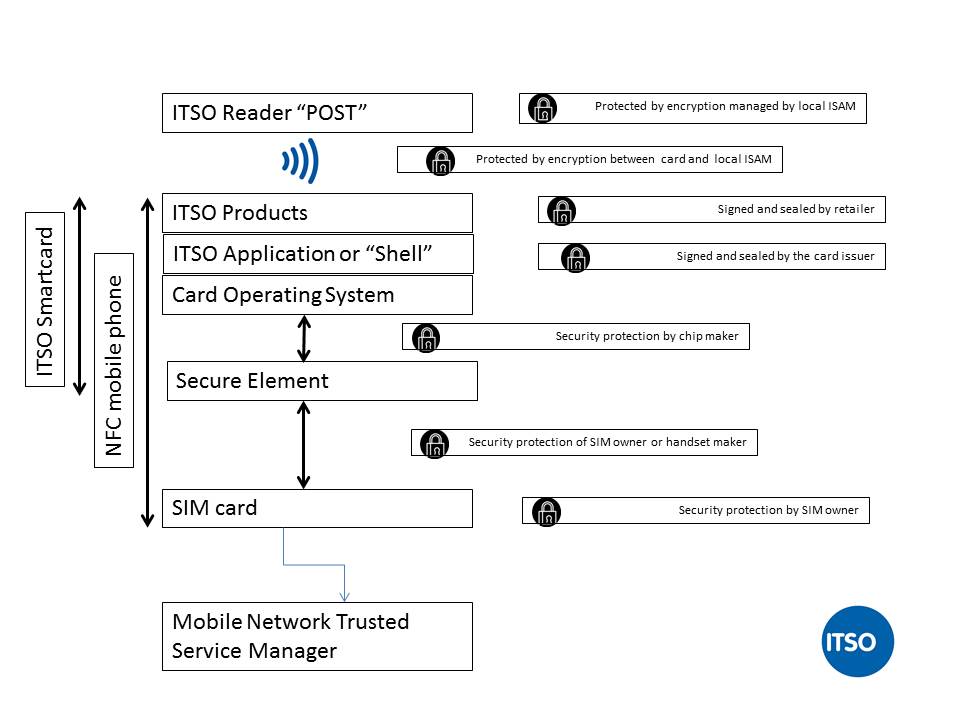
All ITSO-compliant systems rely on ISAMs (ITSO Secure Application Modules) which are secure electronic data processing modules, the size of a mobile phone SIM card. These check the card holders’ permissions, authenticate and validate their electronic tickets, and store journey data for further processing.
The ISAM communicates with the back office system (HOPS or Host Operator or Processing System) through another security device called an HSAM (HOPS Secure Application Module).
The overarching security application module in a system is known as the Primary HSAM or PHSAM.
ISAMs are inserted into railway ticketing gates and machines, or on bus, tram or ferry ticket vending machines. They can also reside within handheld ticketing machines used by bus or train ticket inspectors, or be used in toll systems such as on bridges or in transport tunnels.
When an operator sets up an ITSO system, the ISAMs are profiled using the ITSO Security Management System (ISMS) which is run by ITSO Limited. This is the central part of the ITSO Security Sub System which acts as the ‘keeper of the keys’, managing the provision of data access keys to the secure devices (ISAMs) in ticketing machines and barriers.
The electronic wallet within a smartcard that contains electronic tickets for ITSO-compliant schemes, similar to an ‘app’ on a smartphone, is known as a shell. The shell can be programmed to be read by machines to say ‘yes this person has enough money on the card to pay for this ticket’, or ‘yes this person is a railway season ticket holder for this route’. This is programmed by individual transport operators to reflect their individual tickets and prices.