
What Is Kiosk Mode?

Kiosk mode locks down a kiosk to its desired screen content and limits access to other web pages.

The software protects the operating system from outside users manipulating the network, by blocking access to the desktop or browser and disabling file downloads. It also means that when the previous session has ended and the kiosk is idle for a while, the interface returns to the original starter screen.
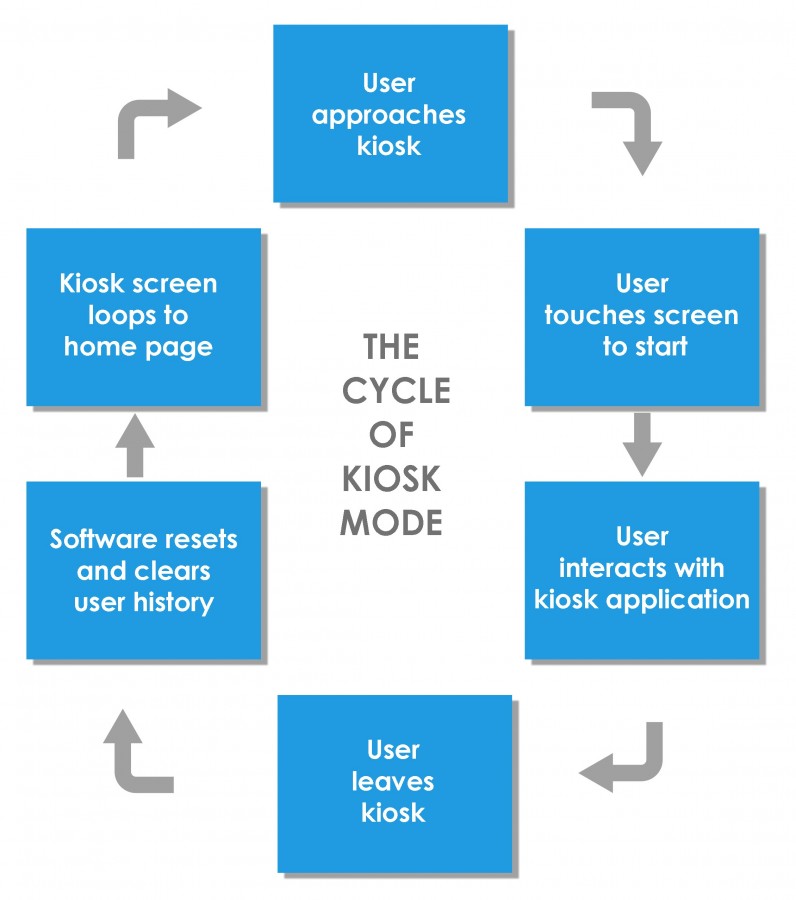
Kiosk Software User Cycle

Securing a kiosk should be a main priority during deployment, to ensure that the system is protected against tampering. Kiosk mode gives the deployer control over what sessions are available to the user. In kiosk mode, user is unable to switch to different applications.

Kiosk mode secures connectivity by preventing users plugging in USB’s and downloading unwanted content. Also, the software prevents hackers accessing sensitive information or causing harmful viruses.

Internet kiosks are a bigger challenge, as they are more vulnerable to malicious code and manipulation of stored material.

Share the Post:

Related Posts

“My team got me here”. How Cammax found its future with Modaxo.

After more than two decades of innovation, Cammax has entered a new chapter by joining the Modaxo family. Managing Director Julian Rooney underlines the importance of his team and reveals how the move secures the company’s future, empowers its people, and fuels even greater innovation in transport and parking technology.

Cammax: How ‘Destructive Creativity’ Drove 25 Years of Innovation

For 25 years, Cammax has led innovation in ticketing and parking solutions. Find out about the company's impressive heritage in mobile technology, the meaning behind the name Cammax and discover how their approach of ‘Destructive Creativity’ has helped them stay ahead in a competitive industry.

Why Getting Parking Right Matters For Our Cities

Effective Park & Ride (P&R) schemes are transforming urban mobility. Cities like York and Portsmouth are leading the way by integrating user-friendly ticketing, reliable bus services, and modern infrastructure. When executed well, P&R not only reduces congestion and emissions but also enhances the overall passenger experience, making sustainable travel a viable and attractive option.